
The 265/35R22 Tire Decoded
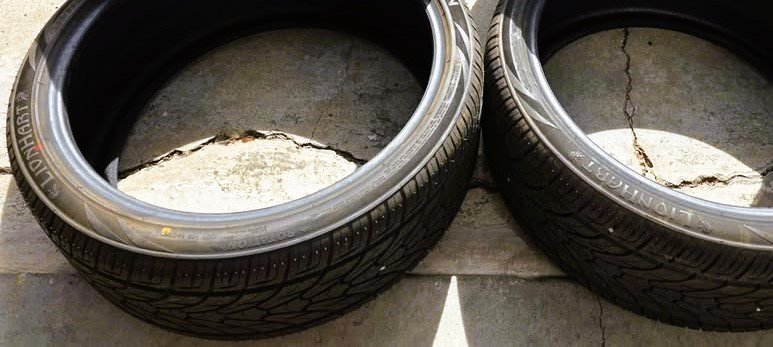
The allure of 22-inch wheels is undeniable. They provide an aggressive “pro-touring” stance that can transform a standard SUV, truck, or sedan into a head-turning showpiece.
However, as many enthusiasts discover on platforms like Quora and Reddit, moving to a 265/35R22 tire size is more than just a visual upgrade—it is a significant mechanical shift.
What Do Those Numbers Mean?
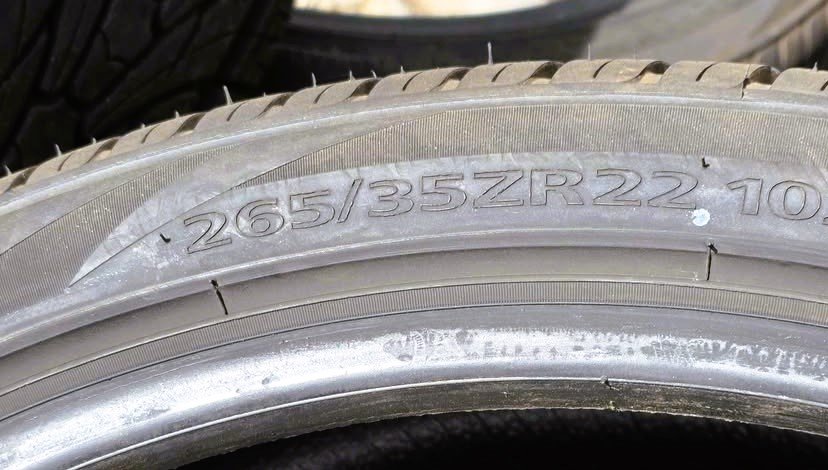
To the uninitiated, tire codes look like a secret language. Here is the breakdown of the 265/35R22 designation:
- 265 (Section Width): This is the width of the tire in millimeters from sidewall to sidewall. At roughly 10.43 inches, this tire provides a substantial footprint for better grip but requires careful clearance in the wheel well.
- 35 (Aspect Ratio): This number represents the height of the sidewall as a percentage of the width. In this case, the sidewall is 35% of 265 mm. At only 3.65 inches, this is a “low-profile” tire, offering sharp steering response but very little cushion against potholes.
- R (Construction): This stands for Radial, which is the standard construction for almost all modern passenger tires, where the internal cord plies run 90 degrees to the direction of travel.
- 22 (Wheel Diameter): This is the diameter of the wheel (rim) in inches. A 22-inch wheel is a large-format rim typically found on SUVs, trucks, and high-end luxury sedans.
A 265/35R22 tire has an overall diameter of 29.3 inches, a section width of 10.43 inches, and a sidewall height of 3.65 inches. This low-profile tire configuration is designed to be mounted on 22-inch rims to provide a balance of wide footprint and large-diameter aesthetics.
- Overall Diameter: 29.3 inches
- Section Width: 10.43 inches
- Sidewall Height: 3.65 inches
- Rim Diameter: 22 inches
- Circumference: 92.05 inches
These tires are commonly used on modern SUVs, luxury crossovers, and customized pickup trucks, providing enhanced steering response, increased lateral stability, and an aggressive, high-performance aesthetic.
1. How many inches tall is a 265/35R22 tire?
The total height is approximately 29.3 inches. This is calculated by taking the 22-inch wheel and adding the top and bottom sidewall heights (22 + 3.65 + 3.65).
2. Why do I keep popping tires with this size?
With only 3.65 inches of sidewall, there is very little “give.” Striking a pothole causes a pinch shock, where the tire is crushed between the road and the metal rim, severing the internal structure.
3. Will switching to 18-inch wheels stop my tires from popping?
Yes. Moving to a smaller wheel (like an 18-inch) allows for a much taller sidewall. This extra rubber acts as a primary damping element, absorbing impacts that would otherwise destroy a 22-inch tire.
4. How much will this tire affect my speedometer?
It depends on your vehicle’s original tire size. If your new 29.3-inch tire is more than 3% larger than the factory equipment, your speedometer will under-report your speed, meaning you are traveling faster than indicated.
5. Can I run a “square” setup if my car came with wider rear tires?
Yes, you can swap to four identical 265/35R22 tires (a “square” setup) to allow for regular rotation, provided the front wheel wells have the 10.43-inch width clearance and compatible offsets.
6. What is the range penalty for electric vehicles (EVs)?
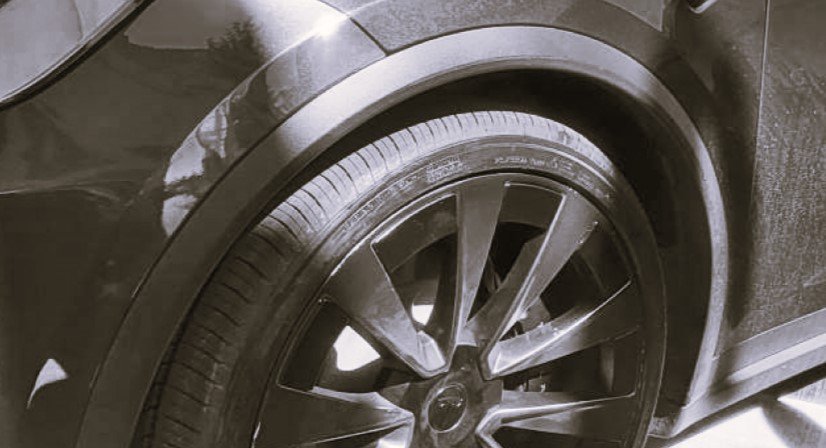
On vehicles like the Tesla Model X, moving to a 22-inch setup with 265/35R22 tires can result in a 22% to 23% increase in energy consumption, reducing real-world range by 30-40 miles.
7. Does this tire size cause “tramlining”?
Yes. The wide 265 mm contact patch combined with stiff 35-series sidewalls makes the tire prone to following ruts or grooves in the road, requiring more active steering input.
8. Will these fit on a classic Chevy C10 truck?
It is a popular choice for “pro-touring” C10 builds. However, if the truck is lowered (e.g., a 7/10 drop), you may experience rubbing during “lock-to-lock” turns or when hitting deep dips in the road.
9. Do I need to “roll” my fenders for this size?
On many domestic sedans like the Chevrolet Impala or Dodge Charger, the 265 mm width often requires professional fender rolling or trimming the inner liners to prevent rubbing during suspension compression.
10. What wheel offset is best for a Ford Flex or Chrysler Pacifica?
A +30mm offset on a 9.5-inch wide rim is often cited as the “sweet spot,” providing enough clearance for suspension struts while keeping the tire under the fender.
11. Can a 265/35R22 tire cause AWD system failure?
If the rolling circumference differs by more than 1% from the other tires on an All-Wheel Drive system, the center differential can overheat. Always ensure all four tires are identical in diameter.
12. Is a 40-series profile (265/40R22) better?
A 40-series tire is roughly 1 inch taller (30.3 inches). While it offers a smoother ride and more rim protection, the extra height often causes significant rubbing in the front wheel wells of most cars.
13. How does wheel weight affect performance?
Larger 22-inch wheels have higher rotational inertia. This requires the engine or electric motor to work harder to accelerate, often resulting in a slower 0-60 mph time and reduced braking efficiency.
14. What is the ideal rim width for this tire?
Most manufacturers recommend a rim width between 9.0 and 10.5 inches. Mounting on a narrower rim “crowns” the tread, while a wider rim “stretches” the sidewall, increasing the risk of rim damage.
15. Are there special air pressure requirements?
Low-profile tires are highly sensitive. Even slight under-inflation can lead to heat buildup and blowouts, while over-inflation further degrades the already harsh ride quality.
Reviewing the 265/35R22
Based on technical data and community feedback, the 265/35R22 is a high-stakes tire size. It is a specialized tool that performs beautifully in specific conditions but fails quickly in others.
Aesthetics and Handling
If you live in an area with well-maintained, smooth pavement, this tire offers exceptional lateral stiffness. The steering feels “connected” and “darty,” and the visual presence is unmatched. For show cars and “restomods,” it provides the perfect fill for large wheel arches.
Durability and Refinement
The primary drawback is a total loss of vertical compliance. You will feel every expansion joint and pebble on the road. Furthermore, the 3.65-inch sidewall is a liability in urban environments; a single pothole encounter is frequently a $300+ mistake (the cost of a new tire and potential rim repair).
The “EV” Factor
For Tesla or Kia EV6 owners, the transition to this size is a major efficiency trade-off. The 20%+ range loss and increased road noise (NVH) often lead to “buyer’s remorse” for those who use their EVs for long-distance commuting.