
305/50R20 in Inches: Sizing Calculations, Rim Specs, and Truck Fitment Guide
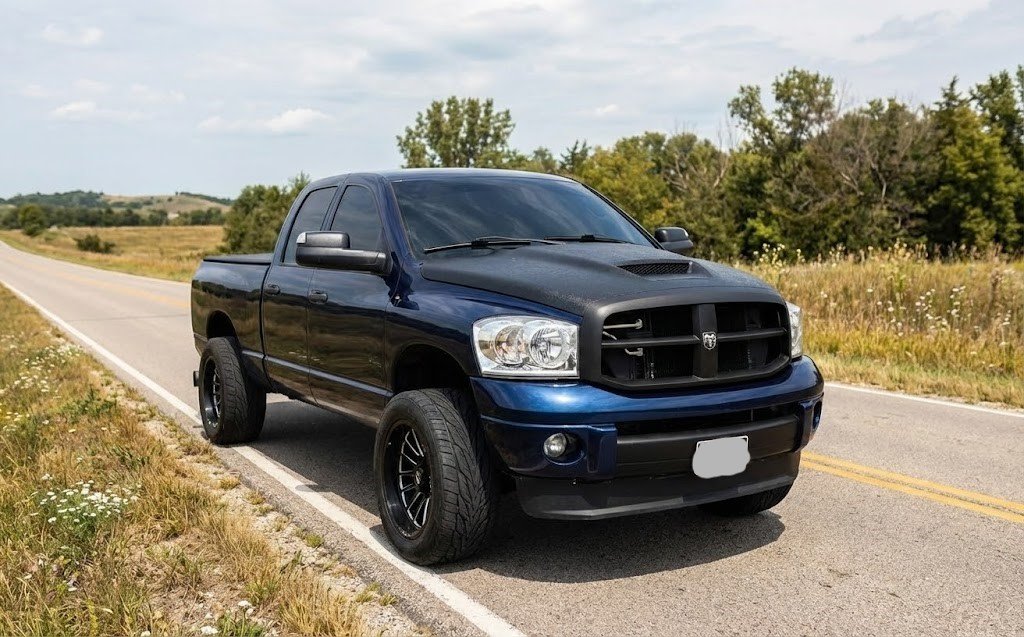
Evaluating tires for a light truck or full-size SUV, switching from standard original equipment manufacturer (OEM) sizes to a wide-profile metric size like 305/50R20 can drastically transform both your vehicle’s stance and its performance.
However, looking purely at standard tire comparison charts will not give you the full story. Because this metric configuration features an atypical ultra-wide section footprint matched with a relatively low profile wall, fitting it successfully requires a firm grasp of both pure mathematics and physical clearance constraints.
What Are the Dimensions of a 305/50R20 Tire in Inches?
To convert a metric tire size to imperial dimensions, you must calculate three core variables: section width, sidewall height, and total overall diameter. Below is the precise mathematical breakdown for a 305/50R20 tire.
Metric to Imperial Conversion Breakdown
- Section Width (W): The nominal width of the tire from sidewall to sidewall is 305 millimeters.
Calculation: 305 mm ÷ 25.4 = 12.01 inches - Sidewall Height (H): The aspect ratio of “50” indicates that the sidewall height is exactly 50% of the section width.
Calculation: 305 mm x 0.50 = 152.5 mm
Conversion: 152.5 mm ÷ 25.4 = 6.00 inches - Total Overall Diameter (D): The total unladen height of the tire includes the wheel diameter plus two equal sidewall profiles.
Calculation: (2 x 6.00 in) + 20 in = 32.00 inches - Total Rolling Circumference (C):
Calculation: 3.14159 x 32.00 in = 100.53 inches - Revolutions Per Mile:
Calculation: 63,360 inches/mile ÷ 100.53 in = 630.25
| Tire Specification | Measurement / Value |
|---|---|
| Metric Sizing | 305/50R20 |
| Overall Diameter | 32.00″ (32.01″ actual) |
| Section Width | 12.01″ (305 mm) |
| Sidewall Height | 6.00″ (152.5 mm) |
| Wheel/Rim Diameter | 20″ |
| Optimal Rim Width | 8.5″ – 11.0″ (9.5″ is ideal) |
305/50R20 vs. 33×12.50R20: What is the Practical Difference?
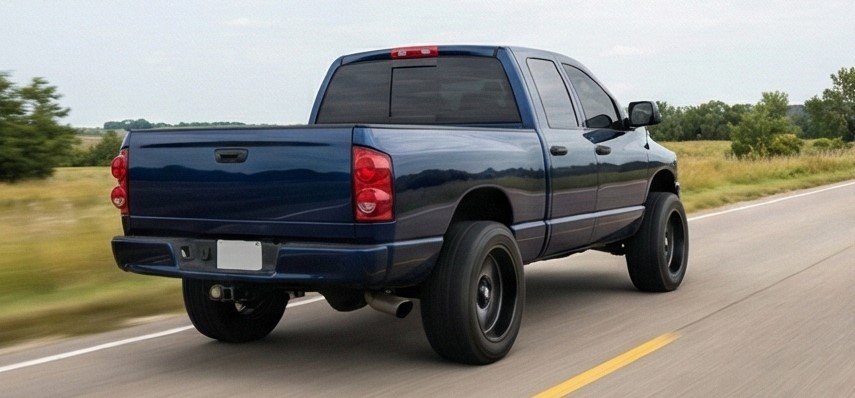
Many custom builders confuse the 305/50R20 profile with a standard $33 \times 12.50\text{R20}$ flotation tire. In physical practice, the 305/50R20 functions as a shorter, wider alternative.
A true $33 \times 12.50\text{R20}$ measured out on a rim typically yields a 32.50-inch to 32.80-inch actual diameter. The 305/50R20 sits exactly at 32.00 inches tall. This gives you nearly the identical wide footprint ($12.01″$ vs $12.50″$) but drops the height by roughly half an inch.
This minor drop in vertical height is often the critical threshold that allows truck owners to run a wide, aggressive tread without having to install a massive suspension lift kit.
Approved Rim Width Ranges for a 305mm Section Width
A primary error made during installation is forcing a wide 305mm tire bead onto an unapproved or poorly paired rim width. Industry-standard specifications dictated by the Tire and Rim Association outline strict rules for safely handling a 12-inch wide section.
Why Mounting on an 8.5-Inch OEM Rim Risks Center Tread Wear
While some factory truck rims measure 20×8.5 inches and can technically accept a 305/50R20 bead, this pairing creates severe lateral pinch. Dropping a 12.01-inch wide tire onto an 8.5-inch rim forces the sidewalls to bulge inward dramatically.
This excessive inward crowning distorts the tire’s tread contact patch, creating a high-pressure point right down the center line of the tire. Over a few thousand miles, our technicians routinely observe accelerated center-tread wear, even when running correct cold inflation pressures. Furthermore, this pinch reduces lateral stability, resulting in a noticeably looser, less predictable steering response through corners.
The Ideal Wheel Spec: Evaluating 20×9 vs. 20×10 Aftermarket Setups
-
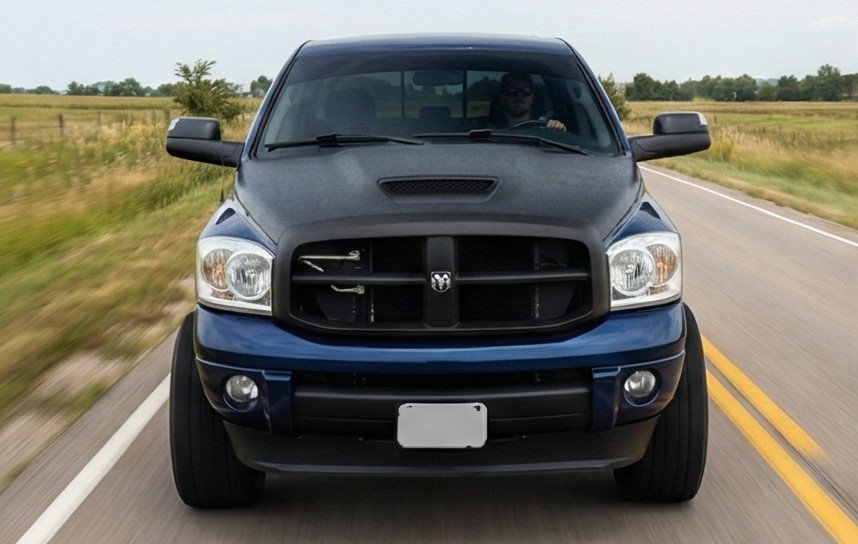
20×9 Rims (The Street/Utility Compromise): A 9-inch wide wheel provides an excellent baseline. It keeps the sidewall relatively square, ensures the bead stays fully seated under heavy payload conditions, and minimizes the overall section width expansion.
-
20×10 Rims (The Aggressive Stance): A 10-inch wide wheel stretches the 305mm tread flat. This layout optimizes the tire’s footprint across its entire width and squares off the shoulder blocks for a highly aggressive aesthetic. However, be aware that stretching the tire on a 10-inch wheel increases its actual measured section width past 12.01 inches, making outer fender clearance significantly tighter.
Real-World Truck Fitment: Will a 305/50R20 Rub on Stock Suspension?
Because a 305/50R20 tire is only 32 inches tall, it is virtually identical in height to standard stock half-ton truck tires (such as a 275/55R20, which measures 31.91 inches).
The Fitment Rule: Your clearing obstacle with a 305/50R20 is almost never the height of the tire; it is entirely a matter of width clearance during full steering rotation.
Ford F-150: Clearance Realities and Crash Bar Safety
On stock, unaltered suspensions, mounting a 305/50R20 tire onto factory wheels ($+44\text{mm}$ offset) pushes the inner sidewall incredibly close to the upper control arm (UCA) ball joint and the front anti-sway bar. You will generally experience light rubbing against the sway bar when turning the steering wheel lock-to-lock.
If you switch to aftermarket wheels to move the tire away from the suspension, you face a different obstacle: the frame-mounted safety crash bars found on modern F-150 chassis.
Pushing the wide tire out using a $0\text{mm}$ or negative offset wheel shifts the outer tread blocks right into the path of those front and rear crash bars during a turn. To run this tire on an aftermarket rim without cutting or unsafely modifying your safety equipment, you must install a minimum 1.5-inch to 2-inch front leveling kit.
Chevrolet Silverado / GMC Sierra: Solving the Square-Wheel-Well Rub
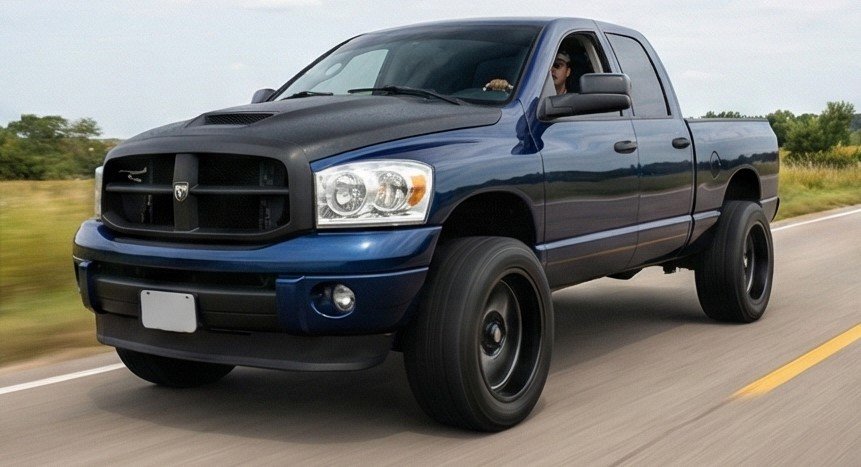
General Motors’ half-ton platforms are notoriously unforgiving due to their squared-off wheel well openings. A stock Silverado running a 305/50R20 will clear inner suspension components by a razor-thin margin on factory wheels. However, if you hit a bump while turning, the wide shoulder lugs will often catch the plastic inner fender liner.
If you pair this tire with a wide aftermarket wheel that has a aggressive negative offset, it will rub heavily against the lower back corner of the front fender sheet metal—often referred to as the “mud flap area.” To safely run a 305/50R20 on a GM truck with custom wheels, expect to install a 2-inch leveling kit along with a minor pull-back of the plastic inner liner.
Ram 1500 & Toyota Tundra Fitment Specifications
-
Ram 1500 (Fifth-Generation DT Chassis): These trucks handle width slightly better than GM. A 305/50R20 will clear on stock suspension with factory wheels, though you will see slight scuffing on the front sway bar at full steering lock. Upgrading to a 9-inch wide wheel with a mild positive offset ($+12\text{mm}$ to $+18\text{mm}$) clears both the inner suspension and outer body panels without needing modifications.
-
Toyota Tundra: Tundras feature highly intrusive front bumper plastic valences and inner skid plates. When installing a 305/50R20, expect to trim or shim the front bumper plastics forward by roughly half an inch to stop the wide tread edges from catching when backing out of parking spaces.
How Wheel Offset and Backspacing Dictate Front Clearance
Clearance is determined by a combination of tire size and wheel position. The offset—the distance from the wheel’s mounting centerline to its hub face—dictates the swing arc of your tire.
      │
┌─────┼─────┐
│     │     │
│     │  *  │ <-- (Hub Mount)
│     │     │
└─────┴─────┘
! Clears outer fenders; likely to rub Upper Control Arm (UCA) or inner sway bar.
      │
┌─────┼─────┐
│     │     │
│  *  │     │ <-- (Hub Mount)
│     │     │
└─────┴─────┘
! Clears inner suspension; highly likely to rub outer bumper plastics or fender liners.
The Pitfalls of Deep Negative Offsets (-12mm to -24mm) with Wide Tires
When truck owners want a “deep dish” look, they often opt for wheels with negative offsets like $-12\text{mm}$ or $-24\text{mm}$. Pushing a 12.01-inch wide tire that far outward radically alters your vehicle’s scrub radius—the distance between the steering axis center line and the center of the tire’s contact patch.
As you push the tire further out from this steering axis, it no longer rotates neatly in place. Instead, it swings through a wide, exaggerated arc like a pendulum. This movement forces the outer edges of the tire to swing violently into the rear fender sheet metal and front bumper valences.
Unless you are planning to install a full 4-inch to 6-inch suspension lift kit, avoid pairings that combine a wide 305/50R20 tire with deep negative offset wheels. For leveled or stock applications, stick closely to mild positive offsets ranging between $+12\text{mm}$ and $+20\text{mm}$.
Speedometer Variances, Drivetrain Gearing, and MPG Impacts
Before purchasing a set of wide 305mm tires, you should account for how changing your rolling parameters will affect your vehicle’s electronics and mechanical efficiency.
Speedometer Corrections
If your truck came factory equipped with smaller tires like a 265/60R18 (30.5 inches), upgrading to a 305/50R20 (32 inches) increases your overall rolling height by roughly 5%. Because the larger tire covers more ground per revolution, your speedometer will read slower than your actual road speed. At a indicated 60 mph, your vehicle will actually be traveling at approximately 63 mph. This variance can be recalibrated using an aftermarket ECM flash tool or a dedicated inline speedometer calibrator.
Drivetrain Load and Fuel Economy
A wide 305/50R20 tire features a heavy steel-belted footprint and high rolling resistance. Compared to standard passenger-grade factory tires, an all-terrain or mud-terrain tire in this size increases un-sprung rotational mass by anywhere from 10 to 20 pounds per corner.
Your powertrain will require more torque to get this mass moving from a complete stop. This extra strain directly impacts your fuel efficiency, often resulting in a drop of 1 to 2.5 miles per gallon (MPG) in city driving conditions. If your truck runs a tall factory gear ratio (such as a 3.23 or 3.08 rear axle ratio), you will also notice a slight reduction in initial off-the-line acceleration.